


Medieval Helmets
 List of the helmets in production: Cervelliere, Spangenhelm, Nasal helmet, Bascinet, Barbute, Close helmet, Combat helmet, Great helm, Coppergate Helmet, Coventry Sallet, Frog-mouth helm, Horned helmet, Kettle hat, Visor (armor).
The Medieval helmet of the ninth and tenth century do not differ substantially from those of the Romans. Typical of this period is the Cervelliere Helmet. Towards the end of the 12th century. He begins the dualism between Bascinet, which is linked to the helmet Cervelliera and from which derive the following helmets to war, and the real combat helmet, which will develop the helmets knight tournament, and parade. In the 13th century. helmet became more closed and eventually cover the entire scalp; characteristic is the helmet cylinder-conical holes for breathing, with one or two horizontal slits for the eyes. In the 14th century. the helmet is developing increasingly perfecting the defensive point of view; often with the addition of the Cervelliere chainmail was reinforced, which grew into Barbute; Bascinet was added to the visor, it is particularly heavy helmets used in the most brutal fighting. This page highlights medieval helmets wearables. Our medieval replica helmet follow original designs very closely of the museums.
reproductions of medieval helmets looks like it came out of a museum.


Medieval Armour
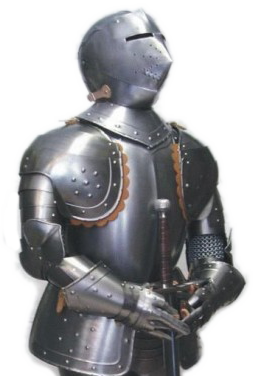 All of our functional Medieval Armours you can choose which type of steel you would like it made from and can be made in different gauges of steel. All our Medieval Armor are fully functional and are adjustable for a comfortable fit. We have a variety of options that you can choose from to design your Medieval Armours.
This page highlights full medieval armor wearable. All the medieval armor are handmade in Italy and each armor sets up in minutes on its own wood base. Our medieval replica armor follow original designs very closely of the museums. Each Medieval armor comes complete with stand on its own wood base as show.
Greeks and Romans
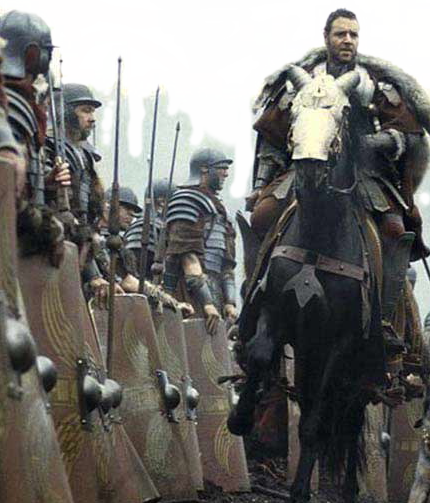 Reproductions Greek and Roman armour: helmets, gladi, ancient swords, breastplates segmented Cingulum Roman Scutum from legionnaire armor, spears, Ocreas Thraex, pugio and many other items made with care and skill of Italian artisans who can work with wood and forged iron. Armor and arms of ancient Rome and ancient Greece can be used for Stage re-enactments, Roman event, theate.
Knights Templar
 The Knights Templar also called Soldiers of the Temple of Solomon and Soldiers of Christ were among most powerful of the Western Christian military orders and were prominent actors in Christian finance. The order of the Templars commonly known as the Knights Templar was an organization existed for nearly two centuries during the Middle Ages.

Fantasy and Film
 We present you all the items from the Movies and Video Games, official products from movies and worn by the characters of the movie "The Lord of the Rings". The pendants, the pins, the rings. The magic of Tolkien's world is recalled in this gorgeous series. Arwen Pendant or Star of Vespers - Elf Immortality Pendant donated by Arwen to Aragorn. Arwen is the only daughter of Elrond, Lord of Rivendal, Arwen is considered the most beautiful among the beings that live in the middle ground. Ring of power forged by Sauron to control all other rings donated to the elves, dwarves, and men Makes it invisible to who wears it. Gandalf Ring. Gandalf never disappears from Middle-earth. Miraculously recapturing from fire and death to appeal to the forces of light, the magician acquires the title of Gandaf the White. The power that had been concealed under the remains of her gray cloak now shines unmistakably in the eyes of the candid magician. The ring company's pendant. When the company of the ring abandoned Lorie, the elves gave each of them a cape of light but warm silk cloth woven by Galadriel. "Every hood was sealed with glue like a silver-plated green leaf The Lord of the Rings: Official Reproduction Authorized by New Line Cinema The Lord of the Rings, Tolkien.


Firearms - Replicas
 The flintlock was invented in 1550. A sharp piece of flint, tightly held in place between the jaws of the cock, strikes a hardened piece of steel and throws out a spark which ignites the powder. Although the flintlock mechanism of these pistols is fully articulated, the weapons is not functional and is a purely decorative item.
The first mention about a firearm, datable with certainity, goes back to the year 1326. The improvement of technology allowed, during the XVIth century, the realization on a large scale of more accurate and effective firearms, thanks to the introduction of automatic mechanisms for the ignition of the powder, while, the XIXth century, witnessed their hyperbolic evolution due to the adoption of revolutionary innovations in rapid succession. "Avalon" proposes a collection of XVIIth and XVIIIth centuries pistols, reproductions drawn from the originals of this age, when the firearm was not only a technological outcome, but also a piece of art. The firearms section is enriched by XIXth century models, both pistols and guns, to give, even of this particular kind of weapons, a complete survey. non Functional.


Terracottas Museum Pompeii
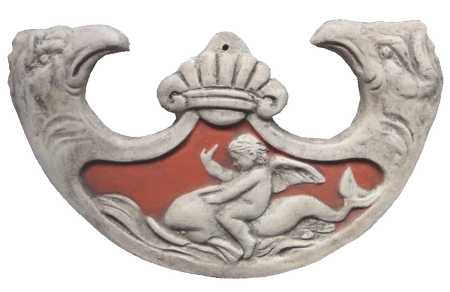 This collection of terracotta sculptures repeats reproductions of ancient art, artifacts found in the most important archaeological sites in the Mediterranean basin belonging to the civilization of Greek, Etruscan and Roman. Terracottas Antiquities Museum Pompeii Herculaneum. The reproductions of terracotta are hand made, following with great care and attention the traditional techniques.
Swords
 Reproductions of Medieval-style swords made of cast metal adorned with symbols characteristic of the Knights with a special focus on ancient and medieval world. Ancient Weapon.
Porcelain Figurines - Sibania
 Sibania Porcelain figurines, Classic Porcelain and Home Decor. Created a new way to produce porcelain figures, on one hand by the application of tulle on eighteenth century style figures and, on the other, by a typically vicentine (Italy) form of ceramics. Each piece is then dried and subjected firing at 1300 °C. After this extremely "hot" firing, the bisque is cleaned and sometimes smoothed to prepare it for decoration. Decorations with an amalgamation of colour, turpentine and vavender essence. The colour is "faded" with special brushes, or "tamponed" with a sponge. Finally the colour is fired in the "third firing", which we do at 950 °C, since we use lead-free colours.


Compare List
Wishlist

Antefix with a Maenad Head
|
|
Related Products


|
|
Salesprice with discount 149,00 € Discount Tax amount |

|
|
Salesprice with discount 240,00 € Discount Tax amount |

|
|
Salesprice with discount 240,00 € Discount Tax amount |

|
|
Salesprice with discount 240,00 € Discount Tax amount |


|
|
Salesprice with discount 240,00 € Discount Tax amount |


|
|
Salesprice with discount 389,00 € Discount Tax amount |


|
|
Salesprice with discount 292,00 € Discount Tax amount |


|
|
Salesprice with discount 312,00 € Discount Tax amount |

|
|
Salesprice with discount 150,00 € Discount Tax amount |


|
|
Salesprice with discount 230,00 € Discount Tax amount |


|
|
49,00 € Salesprice with discount 32,00 € -35% Sales price without tax 32,00 € Discount -17,00 € Tax amount |


|
|
69,00 € Salesprice with discount 49,00 € -29% Sales price without tax 49,00 € Discount -20,00 € Tax amount |
The workshop of Avalon
© 1999 - 2025 Avalon / Libreria Editoriale Sibilla
|
P.IVA IT01503840991 - CCIAA 414855 |
|
|
Via Sant Ugo, 6 R - 16135 Genova- Italy. |

Aut. Internet Marketing Lic.:Cat. 14/E - nr. 2/2005


https - Secure Site
Developed by 1999 - 2025 - © Medieval Armour - by Avalon Shop

